If you’ve lived in the Florida Panhandle for long, you have likely experienced at least one hurricane. They are so common here that, since 1851, our area alone has had more hurricanes than most states. That means homes here have to deal with high winds and torrential rains on a semi-regular basis. And while there are some things you can do to safeguard your home from hurricane damage, others remain out of your control. One example is damage to the power grid. Power outages in our area are common enough to be more than a nuisance. The good news is that you can purchase a whole-home generator to protect your home. Here’s everything you need to know about them and why they are a great fit for Florida Panhandle homes.
The Frequency of Power Outages
Florida’s population density means that power outages often affect more people than they might elsewhere. Hurricanes can cause prolonged power outages as crews work to repair downed transmission lines and flooded distribution facilities. That increases the average impact of the power outages homes typically experience here.
Power Outage Effects
Every time your home loses power, it’s at the mercy of the elements. In our hot, humid climate, your home can quickly become uninhabitable without a functioning HVAC system. Additionally, if there’s anyone medically vulnerable in your home, they may lose access to critical medical support equipment.
Power outages may also compromise the safety of your home. If you have a security system, its battery backup may not last until power returns. In that situation, your home may become a prime target for a burglary. That likelihood increases at night, when a lack of outdoor lighting makes it easier to approach your home unnoticed. That inadequate lighting also poses a safety concern for you. It makes coming and going from your home at night dangerous, as you may trip and fall on unlit pathways. Plus, if you have a garage door opener, it won’t work without power, forcing you to open and close your garage manually.
You may even experience direct financial losses resulting from a lengthy power outage. For example, if the food in your refrigerator spoils, replacing everything can cost more than you think. On average, food spoilage results in at least $200 in direct costs after a power outage. Also, you’ll likely need to procure emergency supplies, such as candles, to get through the outage. That assumes, of course, that you can safely stay in your home at all. If you must leave for the duration of the outage, a hotel can cost you quite a bit of money.
What Is a Whole-Home Generator?
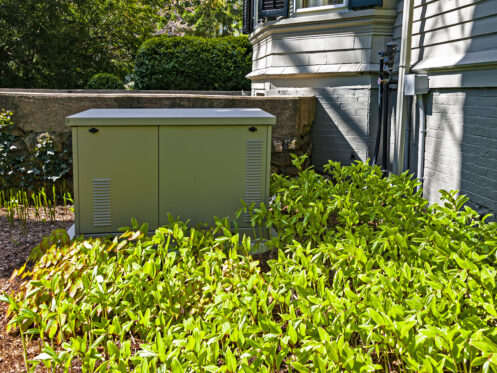
As its name suggests, a whole-home generator is a power generator capable of supplying electricity to your home during a grid failure. Conversely, a standby generator refers to a model that can only power part of your home’s electrical system. Either can make a suitable solution for your Florida Panhandle home, depending on your specific needs.
Generally speaking, there are two fuel options for whole-home and standby generators. The most popular option is natural gas. A natural gas generator connects to your home’s natural gas supply line. The advantage of natural gas as a fuel source is that your generator can run almost indefinitely as long as your supply remains uninterrupted. The other fuel option for a whole-home generator is propane. It’s a good choice if your home doesn’t have a natural gas hookup or can’t get one.
With a propane-powered generator, you can choose a propane storage tank with sufficient supply for your desired runtime. Depending on your generator size, you may select a tank that can keep it running for up to two weeks. Of course, that assumes you have sufficient space to house the required fuel tank.
How Does a Whole-Home Generator Work?
A whole-home generator connects to your home’s electrical panel with a device called an automatic transfer switch acting as a middleman. The switch continuously monitors grid power, looking for any disruptions. When grid power fails, the switch signals your generator to start. After a few seconds of startup time, the switch disconnects your home from the grid and connects it to your generator. Then, the switch keeps monitoring the grid to reverse the process when power returns.
A standby generator works much the same way. The biggest difference is that a standby generator requires you to choose which circuits you want powered in advance. During installation, we segregate those circuits into a dedicated sub-panel. Then, the transfer switch sits between the sub-panel and your main electrical panel. That way, when grid power fails, the generator will only power the circuits in the sub-panel.
How Much Does a Whole-Home Generator Cost?
As with any other major appliance, the cost of a generator will vary based on which one you choose. It can also vary based on your home’s specific installation conditions. In general, prices fall into three main groupings:
- Small Generators (7 to 10 kW): $3,000 to $5,000
- Mid-Size Generators (12 to 20 kW): $5,000 to $10,000
- Large Generators (22 to greater than 30 kW) generators: more than $10,000
If you’re interested in a standby generator, there’s a good chance you can choose one on the small side. With proper power management, it should keep your HVAC, refrigerator, and some lights and accessories running. If you want a whole-home model, the average home in the Florida Panhandle requires a 17 kW system, assuming it has natural gas. That also assumes you have a gas oven, range, and clothes dryer. If your home runs exclusively on electricity, you may need a far larger generator to keep everything operational.
Generator Payback Period
When considering the costs involved in a generator installation, it’s helpful to consider its benefits. For example, a generator can save you more than $1,000 in combined costs from a single power outage. If you select a standby generator, that means it can pay for itself quickly. If you choose a whole-home generator, the direct payback will take longer, but there’s another factor to consider. Local real estate data shows homes with whole-home generators command up to a 5% premium. If your home’s value is near the area average of $258,000, that would mean your whole-home generator would increase your home’s value by $12,900. That may allow you to recoup the entire cost of the installation if you sell your home.
Your Whole-Home Generator Experts
Since 1995, Carnley Services has been the go-to provider of quality generators in Jay, FL. We sell and install generators from today’s top manufacturers. We offer financing options on approved credit if you need help affording a generator. We’re also HomeAdvisor Screened and Approved for your peace of mind. Additionally, we’re Better Business Bureau accredited with an A+ rating, so you can expect excellent customer service from us.
To get a free estimate for your home in the Florida Panhandle, contact our team at Carnley Services today!